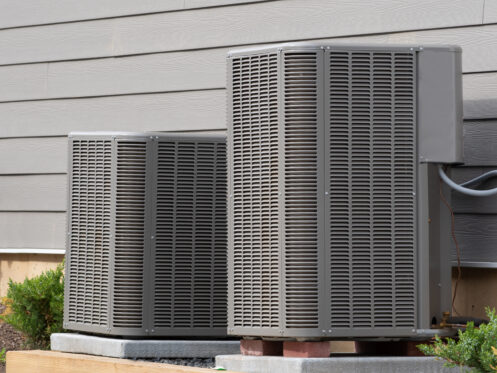
One of the biggest investments that you’ll make as a homeowner is purchasing a new HVAC system. Your heating and cooling system affects your monthly energy bills, your indoor air quality, your property’s value, and your overall comfort. With so many options available on the market today, it can be hard to figure out exactly what system is right for you. Understanding some of the top features you want to look for can help you make a better-informed purchasing decision.
High Efficiency Rating
With the new HVAC system lasting anywhere from one to two decades or more, one fact you never want to overlook is efficiency. The more efficient a system is, the less money you’ll have to spend on your energy bills. It’s important to note that systems with a higher efficiency rating typically come at a higher price than those with a lower rating. It can be helpful to determine your expected long-term energy savings over the lifespan of your new system compared to the higher upfront purchase price.
Central air conditioners and heat pumps have a seasonal energy efficiency ratio, or SEER2 rating. Modern-day systems range anywhere from a low of 13 to over 25. Furnaces have an annual fuel utilization efficiency rating, or AFUE for short. Standard furnaces operate between 80% and 89%, while high-efficiency units operate at between 90% and 98% efficiency. Furnaces that rely solely on electricity operate at 100% efficiency.
Variable-Speed Technology
One of the biggest advancements in HVAC technology over recent years is variable-speed technology. Traditional HVAC systems were designed to operate either on or off. When they turn on, they operate at full capacity. Variable-speed systems completely change the game. These systems can adjust their capacity based on your home’s heating or cooling needs at the time.
For example, if your air conditioning system simply needs to drop the temperature by one degree, it can turn on and operate at, say, 50% capacity. Variable-speed technology provides several different benefits for homeowners. Most importantly, it reduces your system’s energy consumption, which lowers your energy bills.
It improves humidity control by running longer cycles at a lower speed. It reduces temperature swings by keeping a more consistent indoor temperature. Also, by operating at a lower speed than full capacity, they tend to be much quieter than traditional systems.
Appropriate Sizing
Another important attribute you want to ensure your new system has is an appropriate size to meet your needs. HVAC systems come in a variety of different sizes, given by their capacity rating. If you get a system that’s oversized for your home, it will cost more upfront and will frequently cycle. This can lead to uneven temperatures in your home and a shorter lifespan for your new system.
Conversely, if you get an undersized HVAC system, it will struggle to keep up with your heating and cooling demands. It can cause an increase in your energy bills and a decrease in your comfort level. Having one of our HVAC technicians do a Manual J load calculation will ensure that you get an appropriately sized unit to meet your needs. We take into account several different factors, like window placement, home orientation, insulation levels, and square footage.
Advanced Humidity Control
New York experiences very hot and humid summer conditions. High indoor humidity can decrease your comfort and cause you to turn down the temperature on your thermostat. This can lead to more expensive cooling bills throughout the entire summer. Fortunately, newer systems have advanced humidity control features that you can take advantage of.
Some examples of advanced humidity control features include variable-speed blowers, built-in dehumidification modes, and compatibility with whole-home dehumidifiers. By better controlling the humidity in your home, you can increase your comfort and reduce mold growth.
Smart Thermostat Compatibility
It’s standard practice to typically upgrade your thermostat when you’re purchasing a new HVAC system for your home. You want to ensure that whatever HVAC system you buy, it’s compatible with smart thermostats. Smart thermostats are a gold mine when it comes to increasing your comfort and reducing your energy bills. They allow you to better control your temperature throughout the day and even monitor your energy usage. This gives you more information, so you can make better-informed decisions about your system’s usage.
Zoning Capabilities
Zoning technology has changed the game when it comes to reducing energy bills. Zoning allows you to divide your home into separate temperature-controlled areas. Each zone will have its own thermostat, which allows you to have precise control over the exact temperature in that area. This can allow you to customize your comfort throughout different rooms while reducing your energy waste in unused rooms.
Ductless mini-split systems naturally come with built-in zone temperature control, as each indoor air handler unit can be set independently of the rest. Traditional HVAC systems, like furnaces and central air conditioners, can also integrate with zoning capabilities.
This requires the installation of automated dampers that can adjust airflow depending on where you need it. If you have a two-story home that routinely experiences hot and cold spots, you may want to consider zoning. It’s also a great option for home additions and converted spaces where your existing ducting cannot be extended.
Corrosion-Resistant Components
Living in coastal regions like Long Island can take a toll on your HVAC system. The salty air is well-known to prematurely rust any metal components that get exposed to it. Fortunately, newer HVAC systems are available with corrosion-resistant components. For example, many have corrosion-resistant coils that will prevent rust from developing throughout the summer months.
Other great features include stainless steel heat exchangers, powder-coated cabinets, heavy-gauge steel construction, and weather-resistant outdoor units. If you live in or near a coastal region, you may want to consider investing in systems that are specifically designed for coastal regions. This will ensure that you get a long lifespan out of your unit without dealing with the consequences of premature wear and tear due to salty air.
ENERGY STAR Certification
Another thing you want to look for is ENERGY STAR certification. The Environmental Protection Agency (EPA) sets strict standards for operating efficiency. Any unit that has ENERGY STAR certification has been verified to be energy efficient. This is great for reducing your environmental impact and qualifying for many tax incentives. Many local utility companies will provide you with a tax credit when you show proof of an ENERGY STAR-certified system purchase. You can also qualify for federal tax credits under the Inflation Reduction Act of 2022.
Consider IAQ Add-Ons
When selecting a new HVAC system for your home, it’s also a great time to think about indoor air quality (IAQ) solutions. Many times, you can strike a deal on purchasing an item, like a whole-home dehumidification system, alongside a new-age HVAC unit. Some other options include air scrubbers, whole-home humidifiers, and fresh air ventilation systems.
Exceptional HVAC Installation Services
Comfort Solutions HVAC provides exceptional HVAC installation services for Long Island, NY and the surrounding areas. We can also assist with all your HVAC repair, replacement, and maintenance needs. Call our office today to schedule your next installation appointment.